Classical Piano
Europe, 1700–1930
Studies, sonatinas and character pieces, read from the first printed editions.
Music the world handed down, for every instrument: jigs and reels, rags and études, spirituals, kritis and dances in seven.
Every piece is read from its original printed edition. Hear it, take it into your key and onto your instrument, loop the bars that trip you, then play it back and the microphone marks each note.
Choose a plateSand on a bowed metal plate gathers where the plate stands still. Each room has its own plate and its own note: press the note to hear it, and watch the sand find its figure. Two rooms are open; the rest are being written now.
Europe, 1700–1930
Studies, sonatinas and character pieces, read from the first printed editions.
USA, 1899 onward
Ragtime from the Stark plates, plus voicings, ii–V–Is and blues drills in every key.
Ireland
Jigs, reels, slip jigs and hornpipes from O'Neill's collections, with chords.
Scotland, Wales, Cape Breton, Brittany
Strathspeys, marches and airs from Kerr, Gow and the Skye Collection.
USA, 1867–1930
From Slave Songs of the United States, the Fisk and Hampton collections and Sankey.
USA, 1835–1930
Stephen Foster, shape-note hymns, fiddle tunes, parlour songs and Sousa marches.
Bulgaria and the Balkans
Folk dances in 7/8, 9/8 and 11/16, with the beat grouping drawn in.
South India
Compositions of Tyagaraja, Dikshitar and Syama Sastri: sargam with swarasthanas, beside the staff.
Paris 1864 · New York 1893 · Elkhart 1912
Arban's Complete Method and Clarke's Technical Studies, page by page.
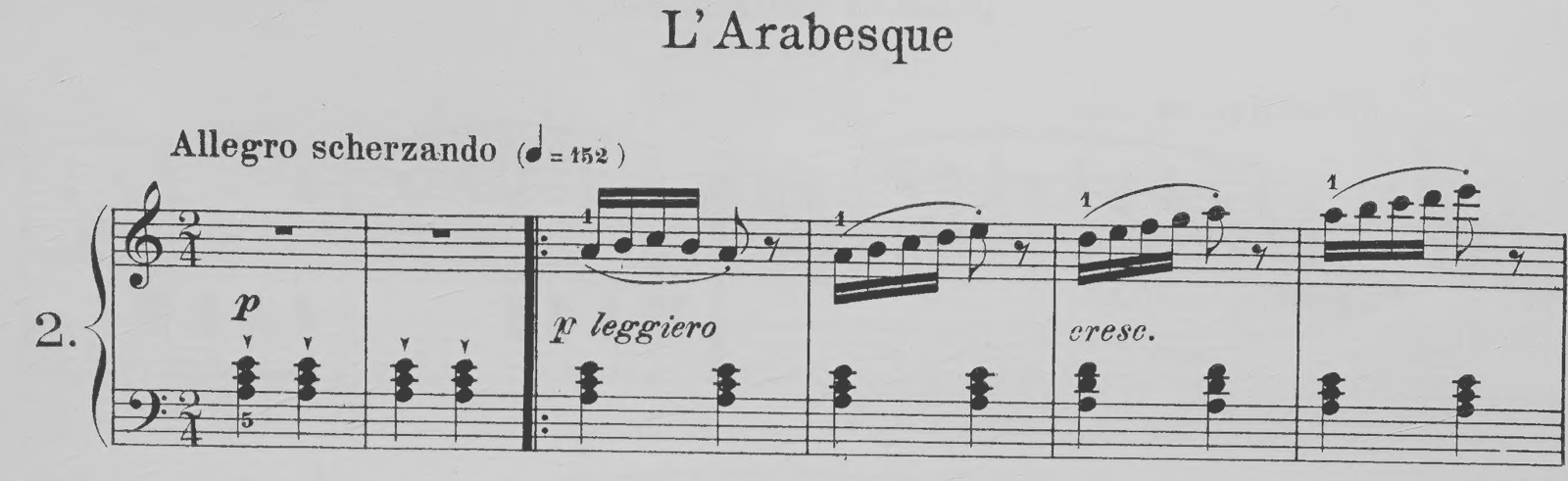
Beside every modern copy sits the page it was read from: Burgmüller's Arabesque as Schirmer engraved it, the Maple Leaf Rag from John Stark's 1899 plates. If you doubt a note, look at the engraving yourself.
Pick any of the twelve keys. Pick your instrument and the part is written for it: a trumpet or clarinet in Bb reads a tone higher than it sounds, an alto sax in Eb a major sixth higher, a horn in F a fifth higher. The sound stays where the band hears it.
Turn on the microphone and play along. Each note turns right or wrong as you play it, with how many cents sharp or flat you were, so you can hear and see your tuning settle.